
Can You Pay Off Your Sleep Debt?
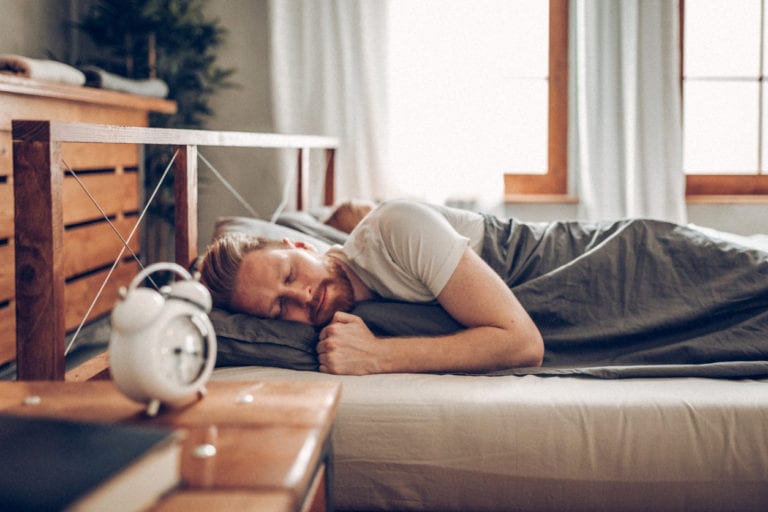
Modified Feb. 11, 2026
If you’re like millions of Americans, you’re not getting enough sleep.
How much is enough? The National Sleep Foundation recommends a minimum of seven hours of quality sleep a night. Sleeping less than that is linked with increased risk for obesity, stroke, and poor mental health.
The good news is that you can catch up!
You may have heard that “once you lose sleep, you can’t get it back,” but research shows it actually is possible to pay back your “sleep debt.”
Concerned about the impact a lack of sleep might have on your body? Visit a CareSpot near you for a wellness check, such as an annual physical. Our dedicated teams will be happy to help you get back on track.
Every March, National Sleep Awareness Week highlights the importance of sleep health and how quality sleep can improve your life in a variety of ways. However, sleep health is vitally important to keep in mind all year long.
Boosted energy is just one of the benefits of getting enough sleep. In addition to lowering your risk for chronic conditions like diabetes and heart disease, you may find yourself enjoying better memory and even catching fewer colds, thanks to a boosted immune system!
The CDC has labeled insufficient sleep a public health epidemic, citing links to motor vehicle crashes, industrial disasters and medical and other occupational errors.
- Drowsy driving is estimated to be the cause of 1,550 fatalities and 40,000 nonfatal injuries annually in the U.S.
- Sleep deprivation causes the mind to shut down and creativity, critical thinking and even paying attention becomes difficult.
- Long term, sleep deprivation contributes to deteriorating health; sufferers are at an increased risk for heart disease, high blood pressure, diabetes, obesity and depression (and increased healthcare costs).
- According to a 1997 survey, sleeplessness costs U.S. employers an estimated $18 billion in lost productivity annually.
- In one study of NASA pilots, naps improved work performance by 34 percent!
Short-term Sleep Debt
Short-term sleep debt is when you generally get enough sleep but experience a rough week or two — maybe working to meet an urgent deadline or caring for a sick child.
When that happens, experts recommend adding 1-2 extra hours of sleep every night (or during naps on the weekend) until you’ve paid back the number of hours you lost.
Long-term Sleep Deficit
Most of us are dealing with a long-term sleep deficit, which is trickier to resolve.
“If you’ve shorted yourself on sleep for decades, you won’t be required to put in a Rip Van Winkle–like effort to repay the hours of missed slumber,” according to Harvard Medical School. “Nonetheless, it could take a few weeks to recoup your losses.”
Sleep Vacation
Experts suggest taking a sleep vacation — a stretch of days with no plans where your main goal is to turn off any alarms and let your body keep sleeping each morning until you wake up naturally.
At first, you may find yourself sleeping 12+ hours a night, but you’ll know your sleep debt is settled when you finally level off into a regular, reasonable amount of sleep that has you waking up around the same time every morning with energy in the tank.
How to Get Better Sleep
Ever wake up in the morning feeling tired as if you didn’t get any sleep the night before? There are many factors that may have contributed to your restless sleep, and some of them could be prevented. Here are seven tips on how to sleep like a log:
Make Sleep a Priority!
Setting up a sleep schedule and sticking to it will help you get a better night’s rest overall. According to sleepfoundation.org, between 7 to 9 hours of sleep is recommended.
Exercise
Adding exercise to your daily routine is good for you. Exercising as little as 20 minutes a day can improve the way you sleep. Don’t have a gym membership? Check out these at-home exercises. Try to avoid physical activities three hours before your bedtime.
Lights Out, Devices Off
Light tends to distract the mind’s relaxation time.. It’s a great idea to turn off devices such as your phone, tablets and laptops to avoid any sort of light distractions.
If you need your phone on to have your alarm go off, just set your phone on “Do Not Disturb” mode, which should help prevent any distractions that might cause the screen light to turn on. In darkness, our bodies naturally produce melatonin, a hormone that helps our bodies with the sleep and wake cycles.
Develop a Sleep Routine
Creating and adjusting a sleep routine can be a little tricky at first, but once you get into the pattern of sleeping at a certain time, your body will adjust. This will make it much easier to fall asleep, as well as getting a good night’s rest.
Napping
Who doesn’t love napping? Taking naps are actually really good for your health, but be smart about it. Avoid napping right when you get done eating, like after-dinner drowsiness also known as food comas. Those naps will keep you up all night. When you do nap, limit yourself to 30 minutes of napping and try to keep it before or during early afternoon, otherwise you may be tossing and turning at night.
Power Nap Benefit
10 to 20 minutes Boosts alertness and performance
30 to 60 minutes Good for memory and recall
60 to 90 minutes Great for creative problem solving
Caution: After 20 or 30 minutes, nappers run a risk of waking up groggy.
Eating
Hungry at night but don’t know what to eat? Don’t worry, it happens.. Give these snacks, suggested by Reader’s Digest, a try to relax your brain and allow you to have a restful night:
- Small bowl of whole-grain cereal
- Banana
- Granola with either fat-free milk or yogurt
- Walnuts and Almonds
- Chamomile tea
- Tuna
- Honey
Room Setting & Atmosphere
As we previously mentioned, keeping light out from your bedroom at night really helps ease the mind and keeps you relaxed. Having a quiet space with the perfect temperature where it’s not too cold nor hot, will really get you to sleep like a baby. And if you decide to get a little creative with your sleeping atmosphere, why not try having whispering strangers help you sleep?
ASMR stands for Autonomous Sensory Meridian Response. This jumble of words describes, per Wikipedia, “a distinct, pleasurable tingling sensation in the head, scalp, [or back] in response to [assorted] stimuli.” The feeling can be triggered by ambient noises, repetitive movements, and certain emotional states.
If this description sounds at all familiar, you probably experience ASMR. If not, odds are you’re with the majority of the population, and don’t feel the tingly effects. But read on anyway — ASMR may still have benefits for everyone! And content creators on YouTube are now making videos to mimic the effects of ASMR.
According to a piece from the New York Times, ASMR videos offer people a unique way to quiet their thoughts for deep, restful sleep. The story quotes Dr. Carl W. Bazil, a sleep disorders specialist at Columbia University.
“People who have insomnia are in a hyper state of arousal,” Bazil said. “Behavioral treatments such as guided imagery, progressive relaxation, hypnosis, and meditation are meant to trick your unconscious into doing what you want it to do. ASMR videos seem to be a variation on finding ways to shut your brain down.”
The most common ASMR triggers include noises, such as gentle tapping or page-turning, as well as an individual whispering in a caring manner. The second kind of trigger, which can create a calm emotional state, is the reason so many ASMR videos take the form of role plays.
While these make-believe scenarios — often carried out in a salon or spa setting — are entirely scripted by the video creators, viewers report feeling relief from insomnia, anxiety, and even panic attacks after watching.
The first peer-reviewed article about ASMR was published on March 26. Researchers collected online survey results from 475 participants and found that most of them watch ASMR videos just before bed, as a sleep aid.
80 percent of the group said ASMR videos have a positive effect on their mood, whether or not they experience the trademark tingling sensation.
Hope you find these healthy tips helpful. If you need any other advice that can help to get you a great night’s rest, please reach out.
Here’s hoping you’re catching Z’s instead of counting sheep tonight!